
Inner Schooling for the Waldorf Educator:
Deepening Anthroposophical Practice
JULY 26-29, 2027
Held at Threefold Educational Foundation in Chestnut Ridge, NY
Presentations ~ Conversations ~ Art
REGISTRATION OPENS JANUARY 2027
Knowledge of the child as a being of soul and spirit, and not just a physical body, requires that as educators we develop inner capacities:
- imagination and discernment
- self-knowledge for greater objectivity in perceiving the human being in front of us
- inner balance to navigate the challenges and the joys of our profession
Please join us to work through aspects of Rudolf Steiner’s insights, indications, and exercises promoting self-development for the educator. Registration opens January 2027.
Questions? Contact us: innerschooling@gmail.com
Your tax-deductible contribution makes this initiative possible.
About the Conference Leaders
 Dorit Winter began her Waldorf teaching career in 1972 at the Rudolf Steiner School in New York City, her alma mater. In 1981 she joined the Great Barrington Rudolf Steiner School, where she became the founding director of its high school. She moved to California in 1987 to take the Arts Program at Rudolf Steiner College. Subsequently she began 25 years of being founding director of Waldorf teacher trainings in the San Francisco Bay Area. Dorit represented the U.S. at the Hague Circle/Council for Steiner Waldorf Education from 2009 to 2015. The author of numerous articles and five books including Fire the Imagination: Write On!, Dorit “retired” in 2014 but continues to teach, mentor, lecture, write, and learn.
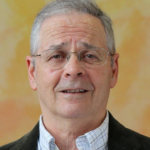 Michael Holdrege, a native of Colorado, completed his Waldorf training in Stuttgart, Germany and then taught at the Rudolf Steiner School in Vienna, Austria for seven years, followed by an additional seven years as faculty and board member at the Institute for Goethean Studies in Vienna. In 1994 he helped found the Chicago Waldorf High School, where he taught life and earth sciences as well as math in the high school until 2019. Michael served on the faculty of the Center for Anthroposophy’s Waldorf High School Teacher Education Program in Wilton, NH, for 17 years, currently teaches at the Waldorf Teacher Institute in Chicago, and is a member of the Pedagogical Section Council of North America (PSC). He recently published two volumes on life science teaching through Waldorf Publications.
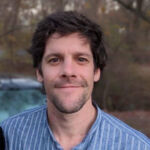 Ezra Sullivan, born and raised in Los Angeles, California, spent twelve years directing agricultural initiatives across South and North America, with a focus on biodynamic farming, intentional communities, and health as a basic human right. Following his residency at the Goetheanum in Dornach, Switzerland, Ezra is now based at Threefold Foundation in New York, where his current focus is spiritual scientific research, social entrepreneurship, and organizational consulting.
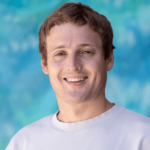 Philip Goldsmith grew up along the front range of the Rocky Mountains in Colorado. He discovered anthroposophy at the age of 21 and promptly moved to California to become a student at the Bay Area Center for Waldorf Teacher Training. Upon completing his training, he spent a year at Camphill Callan in Ireland before starting eurythmy training. He graduated from the Eurythmeum in Dornach (Aesch) in 2021 and became a full-time eurythmy teacher at the Waldorf School in Ludwigsburg, Germany. At the same time he completed his MA in Pedagogical Eurythmy at the Freie Hochschule, Stuttgart. He currently works as a full-time eurythmy teacher at the Wasatch Waldorf Charter School in Salt Lake City, Utah.
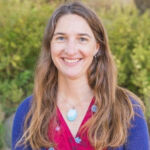 Sarah Dunbar is in her third journey through the grades as a class teacher at the Live Oak Waldorf School in Meadow Vista, California, where she started teaching in 2001. She has earned a B.S. in Biology from Sonoma State University, a Waldorf Teaching Certificate from Rudolf Steiner College, and certification as an Outdoor Educator and Wilderness First Responder from National Outdoor Leadership School. She recently joined the Pedagogical Section Council of North America (PSC).
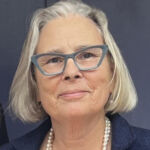 Lisa Anderson, born and raised in Michigan, forged a career in hi-tech before finding Waldorf Education and embarking on her journey with anthroposophy. She was a founding member of the Bay Area Center for Waldorf Teacher Training, from which she graduated in 2003. She spent many years with the Center before becoming part of the administrative staff at the San Francisco Waldorf High School. She is currently retired and continuing her studies in anthroposophy.
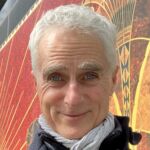 Paul White, Director of Waldorf Grades Teacher Education at Rudolf Steiner College Canada in Toronto, has been a Waldorf class teacher and Waldorf teacher trainer since the turn of the millennium, teaching at Waldorf schools in New Zealand, England, and Myanmar. Prior to that he taught in other far-flung places––Chile, Brazil, Japan, Ireland, Ecuador––but it was only when he discovered Waldorf education that he truly found his home.
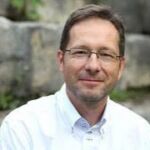 Tomáš Zdražil, a class teacher for many years at the Waldorf School in Semily, Czech Republic, has been an adult educator at the Seminar for Waldorf Pedagogy of the Freie Hochschule Stuttgart since 2007. Professor Zdražil is Director of the Von Tessin Centre for Health and Education and has been a member of The Hague Circle/International Council for Steiner Waldorf Education since 1999. His most recent book, The First Waldorf School, has just been published by SteinerBooks.
SPEECH
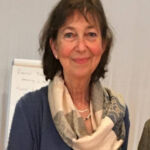 Sibylle Eichstaedt grew up in the industrial heart of Germany. As a teenager, she fell in love with England where, at age 17, she met anthroposophy and where she settled in 1988. She has an M.A. in English and German literature, and Goetheanum diplomas in Speech Formation (1989) and Anthroposophic Therapeutic Speech (2009). Her destiny led her to teaching speech in teacher trainings and other adult education settings in the UK and USA for more than 35 years, as well as working therapeutically in schools and private practice for more than 25 years. She is also the editor of The Newsletter, the membership magazine of the Anthroposophical Society in Great Britain.
EURYTHMY
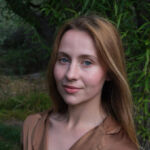 Melissa Goldsmith was born and grew up in Sao Paulo, Brazil. After completing an anthroposophical foundation year after high school, she moved to Dornach to work for the Youth Section at the Goetheanum and start her eurythmy training. She graduated from the Eurythmeum in Dornach (Aesch) in 2020. She then worked artistically for a year with Carina Schmid and performed in Faust at the Goetheanum. From 2021 to 2024 she was a member of the Else Klink Ensemble in Stuttgart, Germany, performing eurythmy and touring. Melissa performed in Parsifal at the Goetheanum in 2023 and 2024. During her time in Stuttgart, Melissa taught eurythmy, part-time at the Silberwald Waldorf School. She currently lives in Salt Lake City where she teaches eurythmy at the Wasatch Waldorf Charter School and works on artistic projects.
Philip Goldsmith grew up along the front range of the Rocky Mountains in Colorado. He discovered anthroposophy at the age of 21 and promptly moved to California to become a student at the Bay Area Center for Waldorf Teacher Training. Upon completing his training, he spent a year at Camphill Callan in Ireland before starting eurythmy training. He graduated from the Eurythmeum in Dornach (Aesch) in 2021 and became a full-time eurythmy teacher at the Waldorf School in Ludwigsburg, Germany. At the same time he completed his MA in Pedagogical Eurythmy at the Freie Hochschule, Stuttgart. He currently works as a full-time eurythmy teacher at the Wasatch Waldorf Charter School in Salt Lake City, Utah.
DRAWING: LIGHT AND DARKNESS
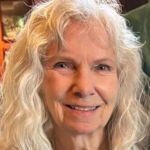 Pamela Whitman incorporates her love of science, art, spirituality, consciousness and healing as an adult educator, painting therapist and painter. She is an international teacher of the work of Liane Collot d’Herbois, based on Rudolf Steiner’s anthroposophy, and is certified by the medical section of the Goetheanum in Dornach, Switzerland, as a Light, Color and Darkness Painting Therapist. She is a graduate of M.I.T. and the Emerald Foundation in The Hague, Netherlands, and has a Master’s degree in Human Development. Her home is in Grass Valley, CA.
SINGING
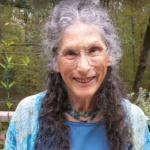 Eleanor Winship attended the Garden City Waldorf School. While in high school there, she studied at The Juilliard School. Eleanor graduated Pi Kappa Lamda from Oberlin Conservatory and was subsequently trained in singing by Jurgen Schriefer, a student of the Swedish opera singer Valbord Werbeck Swerdstrom, who worked closely with Rudolf Steiner. Eleanor has taught music at the Toronto Waldorf School, the Great Barrington Rudolf Steiner School, and the Waldorf School of Atlanta, where she also served as faculty chair. She has mentored and evaluated Waldorf music programs and given music workshops and courses at anthroposophical training centers and conferences across several continents.
Our “Associates” are individuals who have indicated their enthusiasm for our initiative. We may call upon them to support us by helping us to get the word out or take on specific tasks at the conference.
Liz Beaven (President, Alliance of Public Waldorf Schools)
Christine Burke (Speech Artist, Anthroposophical Society Western Region)
Diane David (Teacher Education Committee of WECAN)
Donovan Gay (Waldorf Ways Substack)
Douglas Gerwin (Executive Director, Research Institute for Waldorf Education)
Robert Karp (leader in the organic, local, and biodynamic food movements)
Tim Kennedy (entrepreneur, economic initiatives)
John Scott Legg (Editor-in-Chief, SteinerBooks)
Thomas O’Keefe (Editor, Deepening Anthroposophy, translator)
Laura Radefeld (School Administrator, Green Meadow Waldorf School)
Claus-Peter Röh (Former Leader, Pedagogical Section, Dornach)
Frances Vig (Leader, Pedagogical Section Council of North America)
Christof Wiechert (Former Leader, Pedagogical Section, Dornach)
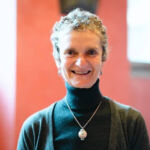
Michal Ben Shalom co-founded the first Waldorf school in Israel in 1989. Since then, she has been a class teacher and active in mentoring new teachers. She co-founded the first Waldorf teacher’s seminar in Israel and later on started the National Forum of Waldorf Education in Israel. She represents Israel at the Hague Circle/International Forum for Steiner/Waldorf Schools. Her mastery and area of expertise lie in class teaching (25 years), methodology, movements, and child observation. Her work has taken her all over the world (including India & Nepal) to various teacher trainer conferences and seminars at the Goetheanum, and the Asian Waldorf Teacher’s Conference as a presenter, and key-note speaker.
About the Program
Click schedule below to open as PDF. 
Members of our Initiative Group have picked a book of their choice by Rudolf Steiner as the basis of their presentation. Altogether there will be six such presentations, each 45 minutes long, and each followed by a 45 minute guided small group conversation.
Monday, July 26, 2027
Presentation by Tomáš Zdražil based on How to Know Higher Worlds, CW 10, by Rudolf Steiner
Tomáš’ choice of an excerpt from How to Know Higher Worlds, Chapter 1, Conditions (Inner Tranquility):
“One of the first of these rules can be expressed somewhat in the following words of our language: Provide for yourself moments of inner tranquility, and in these moments learn to distinguish between the essential and the non-essential. […] Simple, in truth, is the above rule concerning moments of inner tranquility; equally simple is its observation. But it only achieves its purpose when it is observed in as earnest and strict a manner as it is, in itself, simple.”
—Rudolf Steiner
Tomáš’ Supplement:
This practice call for more than going offline or engaging in a “digital detox.” While that is a necessary prerequisite, it is not enough. It is about setting aside times to become blind and deaf to the immediate impressions of the outside world; times when you let go of all memories of that world and all plans for the future.
What experiences arise when you slow down your perception of life in this way? When you simply rest in the present moment? When you pay attention to your heart and your breathing? Or when you focus your full attention on words such as “calm,” “stillness,” or “peace”? How does this practice sustain you in your work in the Waldorf school?
Tuesday Morning, July 27, 2027
Presentation by Michael Holdrege based on Foundations of Human Experience, CW 293, by Rudolf Steiner
Michael’s choice of an excerpt from Foundations of Human Experience, Lecture 1
“Truly, my dear friends, it makes a very great difference whether one teacher of the school or another comes through the classroom door to any group of children. There is a big difference; and the difference is not merely that the one teacher is more skillful in his practice than the other. No, the main difference—the one that is really influential in teaching—lies in what the teacher bears within him, as his constant trend of thought, and carries with him into the classroom. A teacher who occupies himself with thoughts of the evolving human being will work very differently upon his pupils from a teacher who knows nothing of all these things, and never gives them a thought…. The moment you have such thoughts something in you is combating your purely personal nature. The moment you have such thoughts the very basis of this subjective spirit of personality is of less effect. In that moment all that enhances a personal spirit is damped down, all that man possesses through the fact that he is a physical man. If you have quenched this personal spirit, then, as you enter the classroom, it will come about through inner forces that a relationship is established between the pupils and yourself.”
—Rudolf Steiner
Michael’s Supplement:
What does Rudolf Steiner mean, by “occupying oneself with thoughts of the evolving human being”? If we take the convention mindset that most of us bring with us from our 21st century college education, then the generic characteristics of the human beings we are working with have merely evolved over millions of years as a result of what Darwin called “natural selection.” We have learned, too, that every level of biological organization is governed by energy transactions following the principles of chemistry and physics. We have been taught that the basic units of life are cells, which are actually information-processing mechanisms. In the words of one of the fathers of modern genetics, Frances Crick, humans are, in fact, “nothing but a pack of neurons.” In other words, the personal identity, the joys and sorrows, the ideals and search for meaning that humans often consider important, are “in fact, no more than the behavior of a vast assembly of nerve cells and their assorted molecules” (Crick, 1994).
Rudolf Steiner gives us a very different picture of the human being. But how do we get from the one to the other? Is it just a leap of faith? Do we just take up anthroposophy and “believe it” because it feels better, and do we implement the Waldorf approach because it seems to work and the kids seem to be happier? Or is there a huge task that Rudolf Steiner is pointing to when we—in his sense—“occupy ourselves with thoughts of the evolving human being”? Aren’t we called upon to move with hard-won insights beyond conventional thinking (the heart is just a pump, the brain thinks, etc.) and to give concepts like body, soul, and spirit real meaning that we can work with and perceive in the children we have before us? The Foundations of Human Experience is the foundation for the insights we aspire to make our own.
Have we experienced deeper insights into the children and youths because we have tried to occupy ourselves “with thoughts of the evolving human being.”
Tuesday Afternoon, July 27, 2027
Presentation by Philip Goldsmith based on The Thresholds of the Spiritual World, CW 17, by Rudolf Steiner
Philip’s choice of an excerpt from The Thresholds of the Spiritual World, I:
“In waking consciousness human thought is like an island in the midst of the stream of the soul’s life, which flows by in impressions, sensations, feelings, and so forth.[…] Even in a storm of passion and emotion, a certain degree of calm may set in, if the ship of the soul has worked its way to the island of thought.”
—Rudolf Steiner
Philip’s Supplement:
This picture of the ship of the soul working its way to the island of thought can have profound implications for our understanding of the place that the activity of thinking occupies upon an anthroposophical path of inner schooling. Whether we are preparing our lessons, standing in front of the children, reflecting on them afterwards, or attempting to build and nurture our working relationships with our colleagues, the necessity of attaining something akin to this calm inner island amongst the stormy seas is essential. Through will-imbued thinking activity we may come closer to real objectivity regarding the child, the colleague, our own selves. Can we come to recognize, to feel, when we have made steps towards this goal? What effect does this have upon the work?
Wednesday Morning, July 28, 2027
Presentation by Tomáš Zdražil based on Balance in Teaching, Part I of CW 203a, by Rudolf Steiner
Tomáš’ choice of an excerpt from Balance in Teaching, Part I of CW 203a, Lecture 3
“[The teacher] must take in the study of man, understand the study of man through meditation, then remember the study of man, and the remembering will become vigorous life. […] Thus we start with a receiving or perceiving of the study of man, then comes an understanding, a meditative understanding of the study of man, that goes into its inner aspect where the study of man is received by the whole of our rhythmic system; and then comes a remembering of it out of the spirit. This means teaching creatively from out of the spirit; the art of education comes about. It must, be a conviction, a frame of mind.”
—Rudolf Steiner
Tomáš’ Supplement:
Steiner describes these three steps as an essential part of the teacher’s inner meditative preparation for teaching. The first two steps involve engaging with the anthroposophical understanding of the human being. Following intellectual comprehension — gained through individual or collaborative study and a deep, heartfelt understanding achieved through meditative immersion — comes the step of spiritual “remembering.” This step inspires pedagogical practice and gives rise to an artistic form of teaching—an art of education. What practical experiences arise at each of these three levels?
Wednesday Afternoon, July 28, 2027
Presentation by Paul White based on Deeper Insights into Education, Part II of CW 203a, by Rudolf Steiner
Paul’s choice of an excerpt from Deeper Insights into Education, Part II of CW 203a, Lecture 3
“The most fruitful sphere of activity of all is that of education. There, even if education is controlled by dictatorial rules and standards, the teacher can let what he gains from a true feeling for his profession flow into the lessons he gives. He must, however, have a knowledge of man that will imbue life and spirit into what is otherwise dead knowledge, and, on the other hand, have an enthusiasm arising from a really free and open-minded conception of what life actually is today. You must be clear that in outer life you are at the level above, but as a teacher confronting children it is possible to maintain the level below. It is not by practising an educational method based on clichés, but by acquiring real enthusiasm for your profession, the consciousness of your profession, that you can emancipate yourselves from the constraints in educational activity and be inspired by the majesty contained in a true knowledge of man.”
—Rudolf Steiner
Paul’s Supplement:
The clarion call for Waldorf teachers is:
“Imbue yourself with the power of imagination
Have courage for the truth
Sharpen your feeling for responsibility of soul.”
18 months before the lecture above, Mahatma Gandhi was tried on charges of sedition. The trial, described briefly in this lecture, starkly showed the contrast between outer truth or facts (“the level above” in the extract above) and inner truth (“the level below”). In a time of so much untruth in the outer “truths” we face, can a living, spirit-filled knowledge of the human being help us find ‘the level below’? How then do we navigate an education system predicated on outer truths?
Thursday Morning, July 29, 2027
Presentation by Dorit Winter based on “Faith, Love, Hope. The Third Revelation to Mankind” in Esoteric Christianity, CW 130, December 2, 1911, by Rudolf Steiner
Dorit’s choice of an excerpt from “Faith, Love, Hope. The Third Revelation to Mankind”:
“As language is related to a child’s full consciousness, so are the Gospels related to the new revelation that comes directly from the spiritual world—related, in effect, to what Spiritual Science is to become for mankind. We must be aware that we have in fact a certain task to fulfil, a task of understanding, when we come—first out of the soul’s unconscious depths, and then ever more clearly—to discern our connection with anthroposophy.”
—Rudolf Steiner
Dorit’s Supplement:
When we become aware, even momentarily, of the great task in which we are engaged as Waldorf educators, the daily tasks can become part of the ideals which led us into this work. We are preparing human beings not just for their future, but for the future of humanity. To prepare our students, we need to prepare ourselves. Faith, love and hope (as described in the two lectures by that name: December 2 and December 3, 1911) are essential ingredients in that preparation.
Under what conditions have we experienced the moments of spiritual awareness that can sustain us?
Stay tuned for more information coming soon…
Join Threefold’s Mailing List
Community-wide events for the whole family